Implementing predictive analytics for business is like trying to drive a high-performance vehicle down a busy, winding highway while only looking in the rearview mirror. You would know exactly where you have been, but you would have absolutely no idea what obstacles, sharp turns, or hidden opportunities lie ahead until you hit them. Unfortunately, this is exactly how countless companies still operate today. By relying solely on traditional reporting and historical dashboards, they are managing their operations by looking backward.
In today’s hyper-competitive and fast-paced market, knowing what happened last quarter is no longer enough to secure a competitive edge. The organizations dominating their industries have shifted their focus from the past to the future. This is where predictive analytics for business steps in, serving as the strategic bridge between historical data and future profitability.
Executives and digital marketers are no longer just asking what happened. Instead, they are asking what will happen next and how to capitalize on it. Unlocking this future requires more than just basic software; it requires a strategic approach to artificial intelligence. By leveraging top-tier expertise and advanced AI solutions—like those provided by IntelliConsult.ai—businesses can streamline processes, reduce costs, and stay ahead of the curve.
This comprehensive guide will explore the transformative power of predictive models, break down high-impact use cases, and provide a step-by-step roadmap for implementing these advanced strategies within your own organization to maximize ROI.
What is Predictive Analytics for Business?
At its core, predictive analytics is a branch of advanced analytics that makes predictions about future outcomes using historical data combined with statistical modeling, data mining techniques, and machine learning. While it does not offer a crystal ball with 100% certainty, it forecasts probabilities with a high degree of accuracy, allowing business leaders to make proactive, data-driven decisions rather than relying on gut instinct.
Moving Beyond Descriptive Analytics
To truly understand the value of predictive tools, it is essential to look at the analytics maturity curve. Most organizations evolve through four distinct stages of data maturity:
- Descriptive Analytics (What happened?): This is the foundational level of business intelligence. It involves tracking Key Performance Indicators (KPIs), generating monthly sales reports, and visualizing past performance. It tells you that sales dropped by 10% in November, but it doesn’t tell you why or what to do next.
- Diagnostic Analytics (Why did it happen?): This stage digs deeper into the descriptive data to find the root causes of past performance. By cross-referencing datasets, analysts might discover that the 10% sales drop was due to a supply chain bottleneck in a specific region or a poorly optimized website update.
- Predictive Analytics (What will happen next?): This is where the paradigm shifts from reactive to proactive. By analyzing the patterns found in descriptive and diagnostic data, predictive algorithms forecast future trends, customer behaviors, and market shifts.
- Prescriptive Analytics (What should we do about it?): The final frontier. Here, artificial intelligence not only predicts an outcome but recommends the optimal action to take to maximize success or mitigate risk.
Jumping straight from basic reporting to prescriptive AI is a recipe for failure. Mastering the predictive stage—often by partnering with expert AI consultants who can build custom architecture—is the critical stepping stone to becoming a truly data-driven enterprise.
The Core Components of a Predictive Model
Predictive analytics is not a single piece of software you can simply install; it is a complex discipline that relies on a triad of core components working in harmony:
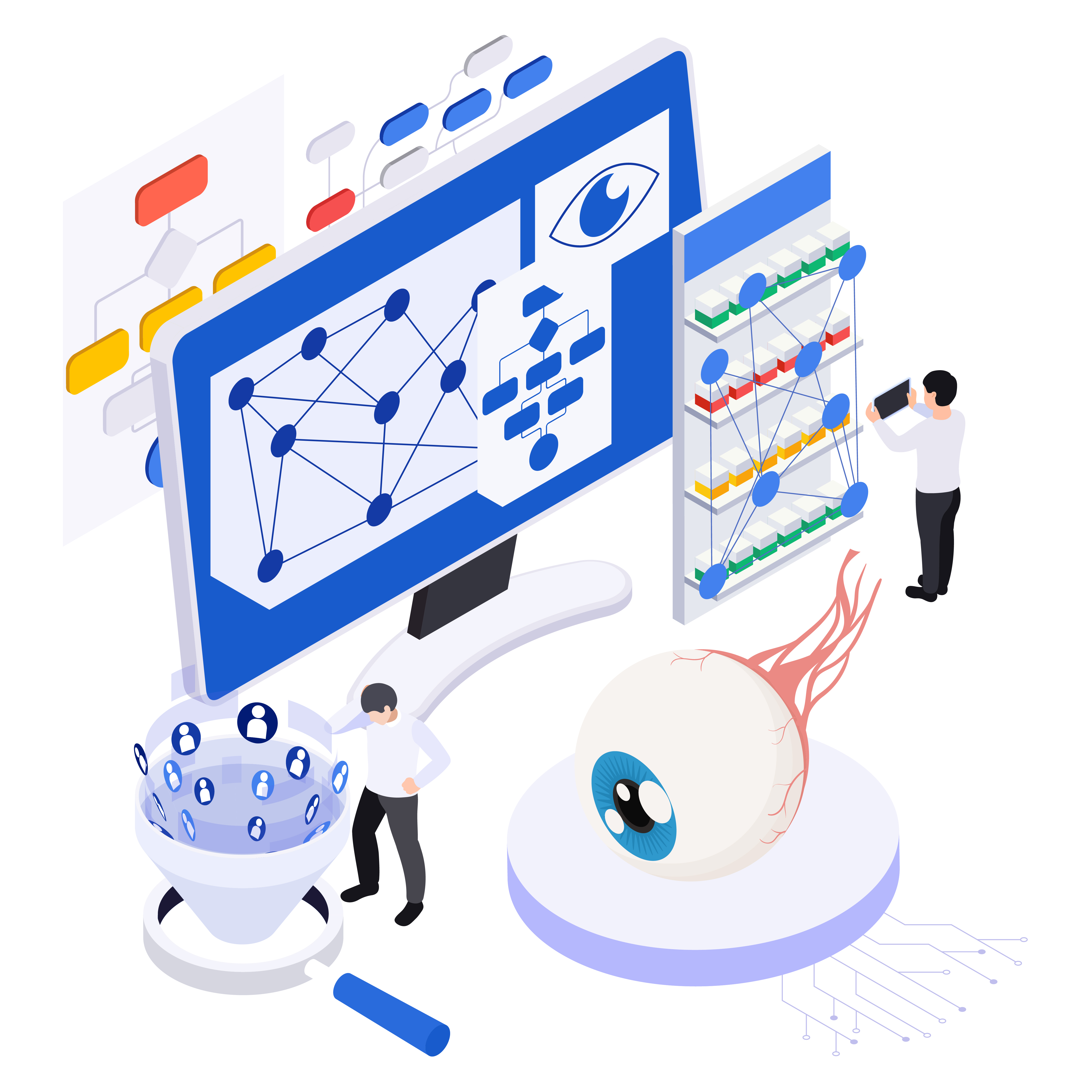
- Historical Data: This is the fuel for the predictive engine. The algorithms require massive amounts of high-quality data to learn from past events. This data isn’t just numbers; modern predictive models utilize Natural Language Processing (NLP) to analyze text from customer reviews and Computer Vision to extract insights from visual data, transforming unstructured information into actionable metrics.
- Statistical Algorithms: These are the mathematical formulas (such as regression analysis, time series analysis, and decision trees) used to identify hidden relationships, correlations, and patterns within the data that human analysts would easily miss.
- Machine Learning (ML): Modern predictive analytics relies heavily on ML. Instead of relying on static formulas, machine learning models continuously learn and adapt as new data flows in. Over time, as they process more information, their forecasting accuracy improves exponentially.
High-Impact Use Cases: Where Predictive Analytics Drives ROI
While the underlying mathematics can be incredibly complex, the business applications are highly practical and revenue-focused. Across various industries, companies are deploying predictive models to solve specific, high-stakes problems. Here are some of the most impactful use cases where predictive technology shines.
Dynamic Pricing Strategies and Revenue Maximization
Pricing is no longer a static number printed in a catalog or hardcoded into an e-commerce platform. In sectors ranging from retail to hospitality, prices must fluctuate based on real-time market conditions. Predictive analytics evaluates competitor pricing, historical sales data, current demand, and even external factors like the weather or local events to forecast the optimal price point for any given moment.
By integrating advanced tools like the Dynamic Pricing API offered by IntelliConsult, businesses can automate this complex process. The AI adjusts prices in real-time to maximize profit margins during peak demand. Meanwhile, it offers strategic discounts during slow periods to maintain steady sales volume. This level of intelligent automation ensures you remain competitive and never leave money on the table.
Customer Churn Prediction and AI-Driven Retention
For subscription-based businesses, B2B service providers, and SaaS companies, customer churn is the silent killer of profitability. Acquiring a new customer is significantly more expensive than retaining an existing one (often up to 5x more costly). Predictive analytics transforms retention strategies from reactive apologies into proactive interventions.
By feeding historical customer data into a machine learning model, businesses can identify the “weak signals” that precede a cancellation. The algorithm analyzes behavioral changes—such as a sudden drop in software login frequency, a decrease in active users on an account, or an uptick in support tickets.
When a high-value account crosses a specific risk threshold, the system automatically alerts your team. Furthermore, by utilizing IntelliConsult’s AI Agent API, businesses can deploy Conversational AI to reach out to at-risk clients instantly, resolving friction points through natural language interactions before the customer ever decides to cancel.
Optimizing Outreach Campaigns and Lead Scoring
In digital marketing and B2B sales, casting a wide net is inefficient and costly. Sales teams often waste countless hours chasing dead-end leads while high-value prospects slip through the cracks and go to competitors. Predictive lead scoring solves this by evaluating prospect data to determine exactly who is most likely to convert.
By analyzing the characteristics of your best existing customers, predictive models score incoming leads based on demographic, firmographic, and behavioral data. More importantly, this data fundamentally transforms outreach campaigns. Instead of sending generic mass emails, marketers can use propensity models to segment their audience based on their predicted likelihood to engage. If the model predicts that a segment of users is highly interested in a new service offering based on their past content consumption, marketers can tailor their outreach specifically to that interest, dramatically increasing open rates, click-through rates, and final conversions.
Supply Chain, Computer Vision, and Inventory Forecasting
The global supply chain disruptions of recent years highlighted the extreme fragility of “just-in-time” inventory models. Traditional inventory forecasting relies on simple historical averages, which completely fail to account for sudden market shifts or external anomalies.
Predictive analytics utilizes a much broader dataset. Retailers and manufacturers can analyze historical sales alongside external variables such as geopolitical events, upcoming holidays, and local economic indicators. Additionally, by applying Computer Vision—one of IntelliConsult’s core offerings—organizations can automate visual tasks like defect inspection and real-time inventory management on the warehouse floor. By predicting exactly which products will be needed at specific locations and ensuring quality control via AI, businesses prevent costly stockouts and optimize their entire logistics network.
The Strategic Benefits of an AI-Driven Analytics Strategy
Investing in predictive modeling requires time, strategic vision, and the right technological partnerships. The organizations that successfully deploy these strategies experience transformative benefits across their entire operation.
Unmatched Cost Reduction Through Outsourcing AI
Building an in-house data science team from scratch is incredibly expensive and time-consuming. Recruiting top-tier AI talent, managing the cloud infrastructure, and maintaining the models requires a massive capital investment that many mid-sized companies cannot justify.
Forward-thinking companies achieve immediate cost reduction by choosing to outsource their AI needs. By partnering with dedicated experts like IntelliConsult.ai, businesses gain access to exceptional, pre-vetted talent at a fraction of the cost of an internal hire. This allows companies to automate repetitive tasks, leverage expert data analysis, and stay one step ahead of the competition without inflating their payroll or dealing with technical debt.
Access to Top-Tier Academic and Industry Talent
The field of artificial intelligence evolves daily. To maintain a competitive edge, businesses must deploy the latest algorithms and research. Collaborating with a consulting firm that maintains strong ties to academic institutions ensures that your predictive models are built on the bleeding edge of technology.
For instance, IntelliConsult’s strong strategic collaboration with Macquarie University provides access to top-tier talent and groundbreaking research in advanced AI. This dynamic partnership shapes the future of AI delivery, ensuring that clients benefit from the most innovative, scientifically backed predictive solutions available in the market, rather than outdated legacy software.
Hyper-Personalization at Scale
Consumers today expect brands to understand their needs intuitively. Predictive analytics allows companies to treat millions of customers as individuals. By predicting what a customer wants to buy next, e-commerce platforms can dynamically alter website layouts, email recommendations, and digital ads to match that specific user’s predicted desires. This creates a seamless, highly engaging user experience that drives massive increases in customer loyalty and lifetime value (CLV).
How to Implement Predictive Analytics: The 4-Step Methodology
Transitioning to a predictive model is a journey that requires careful planning. Many companies fail because they purchase expensive enterprise software before they have laid the proper groundwork. To guarantee success, it is highly recommended to follow a proven, professional consulting framework.
At IntelliConsult.ai, the implementation of predictive analytics for business follows a rigorous, results-driven four-step methodology:
Step 1: Scoping
Never start with the data; always start with the business problem. The scoping phase involves a deep dive into your organization’s unique challenges. Are you trying to reduce customer churn by 10%? Do you want to optimize your pricing dynamically? During scoping, AI experts collaborate with your leadership team to define clear, measurable objectives. This ensures that the final AI solution aligns perfectly with your overarching strategic goals and delivers measurable ROI.
Step 2: Design
Once the scope is clearly defined, the design phase begins. This involves mapping out the necessary data infrastructure, breaking down data silos between your marketing, sales, and operations departments, and designing the architecture of the machine learning models. Strict data governance policies are established to ensure data is clean, standardized, and legally compliant. The design phase also dictates how the predictive insights will be visualized and integrated into your daily workflows—whether through a custom BI dashboard or direct integration via IntelliConsult’s API suite.
Step 3: Development
During the development phase, expert data scientists and AI engineers build, train, and test the predictive models using your historical data. This is where advanced technologies—like Deep Learning, Natural Language Processing, and Computer Vision—are applied to extract maximum value from your datasets. The models undergo rigorous backtesting to validate their accuracy against real-world scenarios before they are ever deployed into a live environment.
Step 4: Support
A predictive model is not a “set it and forget it” tool. As consumer behavior shifts and new market trends emerge, algorithms can experience “model drift,” losing their accuracy over time. The final step is ongoing support and continuous innovation. Dedicated AI consultants monitor the model’s performance in real-time, retraining the algorithms as new data becomes available to ensure your business continues to receive high-performance, pinpoint-accurate forecasts long after the initial launch.
Conclusion
The business landscape of 2026 is unforgiving to those who hesitate. Relying on historical reports to navigate modern market complexities is a guaranteed path to obsolescence. By embracing predictive analytics for business, you transition your organization from a reactive posture to a proactive powerhouse.
Whether it is pinpointing the exact moment a customer might churn, optimizing prices dynamically, or tailoring outreach campaigns with surgical precision, the ability to anticipate the future is the ultimate competitive advantage. The technology is no longer out of reach, and you do not need to build it alone.
Ready to transform today’s business with tomorrow’s AI? Stop guessing and start forecasting. Achieve your AI goals efficiently and affordably by outsourcing your AI requirements to the experts. Visit IntelliConsult.ai today to explore custom AI consulting services, tap into top-tier university talent, and unlock the limitless possibilities of data-driven decision making.