In the modern business landscape, artificial intelligence (AI) has transcended from being a futuristic buzzword to an essential tool driving productivity, innovation, and competitive edge.
From automating mundane tasks to unlocking insights from massive datasets, AI’s versatility has made it an indispensable asset across industries.
AI encompasses a wide range of technologies, each designed to solve specific business problems.
But what are these solutions, and how can they transform your organization? This blog dives deep into the spectrum of AI solutions, their applications, and how businesses can leverage them for sustained success.
Understanding Artificial Intelligence
Before exploring specific solutions, it’s vital to grasp what AI entails. At its core, AI refers to the simulation of human intelligence in machines.
These systems can perform tasks such as learning, reasoning, problem-solving, and decision-making.
AI solutions are categorized into different branches, including:
1. Conversational AI: Transforming Communication
Conversational AI, powered by NLP, enables businesses to engage with customers and stakeholders more effectively. Applications include:
- Chatbots: Deployed on websites, mobile apps, and messaging platforms, chatbots answer customer inquiries, provide product recommendations, and even process orders.
- Virtual Assistants: Tools like Siri, Alexa, and Google Assistant automate tasks such as scheduling, reminders, and information retrieval.
A global e-commerce brand implemented an AI chatbot to handle customer queries. The result? A 40% reduction in response time and increased customer satisfaction.
2. Predictive Analytics: Shaping Future Outcomes
Predictive analytics uses ML to forecast future trends by analyzing historical data. This solution is invaluable for industries that rely heavily on data, such as retail, healthcare, and finance.
- Demand Forecasting: Retailers predict inventory needs based on historical sales data and seasonal trends.
- Fraud Detection: Financial institutions analyze transaction patterns to identify anomalies and prevent fraud.
A logistics company integrated predictive analytics to optimize delivery routes, reducing fuel costs by 25% and improving delivery times.
3. Computer Vision: Enabling Machines to See
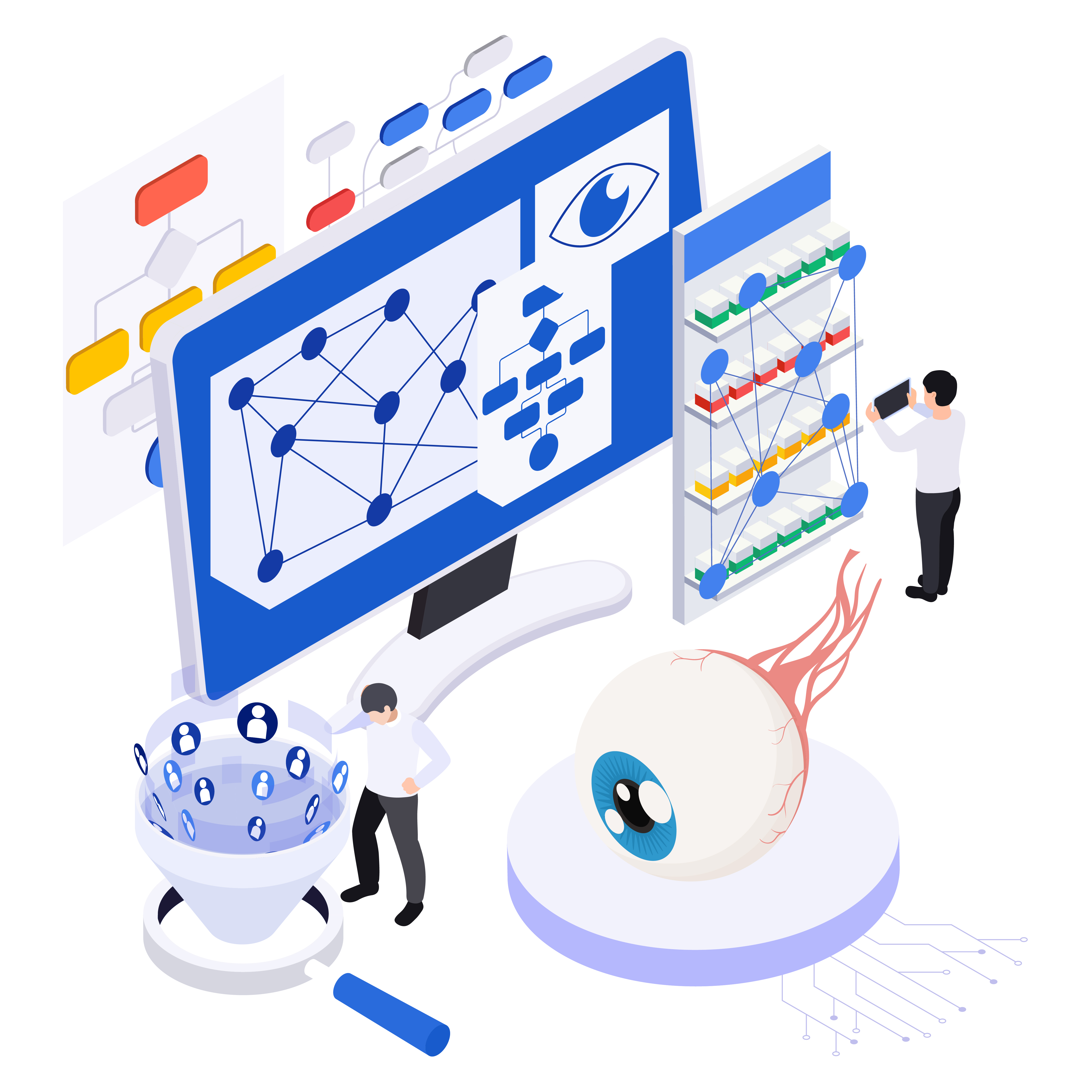
Computer vision enables machines to interpret and analyze visual inputs like images and videos. This technology is widely adopted in industries like healthcare, retail, and manufacturing.
- Quality Control: Automated visual inspections ensure product quality in manufacturing.
- Healthcare Diagnostics: AI-powered imaging systems detect diseases such as cancer and diabetic retinopathy.
An automobile manufacturer used computer vision to identify defects on assembly lines, reducing defects by 30%.
4. Recommendation Engines: Personalizing Experiences
Recommendation systems use ML algorithms to suggest products, services, or content based on user behavior. They are crucial for industries like e-commerce, entertainment, and travel.
- E-Commerce: Platforms like Amazon recommend products based on browsing history.
- Streaming Services: Netflix and Spotify suggest content tailored to user preferences.
A travel agency implemented a recommendation engine, boosting upsells for vacation packages by 20%.
5. Robotic Process Automation (RPA): Automating Repetitive Tasks
RPA is designed to automate mundane, rule-based tasks, freeing employees to focus on strategic activities. Unlike traditional automation, RPA can mimic human actions, such as logging into applications, copying data, and completing forms.
- Invoice Processing: Automating data extraction from invoices and updating accounting systems.
- HR Processes: Streamlining tasks like payroll and employee onboarding.
A financial services company automated its invoice processing, cutting processing time by 60% and reducing errors.
6. Sentiment Analysis: Understanding Customer Emotions
Sentiment analysis involves analyzing text data to determine the sentiment expressed—positive, neutral, or negative. Businesses use it to monitor brand reputation and customer feedback.
- Social Media Monitoring: Tracking customer sentiment about a brand or product.
- Customer Feedback Analysis: Gaining insights from reviews, surveys, and feedback forms.
A hospitality chain used sentiment analysis to identify areas for improvement in customer service, increasing positive reviews by 15%.
7. AI-Powered Cybersecurity: Protecting Digital Assets
As cyber threats grow more sophisticated, AI has become a key player in cybersecurity. AI systems can analyze vast amounts of data in real time to detect and neutralize threats.
- Threat Detection: Identifying unusual activity in networks.
- Incident Response: Automating responses to cyberattacks.
A bank implemented AI-powered cybersecurity, reducing breach response times from hours to minutes.
8. Autonomous Systems: Revolutionizing Operations
Autonomous systems operate independently, using AI to perform tasks without human intervention. These systems are transforming industries like transportation and logistics.
- Self-Driving Vehicles: Reducing human error and improving efficiency in transportation.
- Drones: Delivering packages and surveying infrastructure.
A logistics firm adopted autonomous delivery drones, cutting last-mile delivery costs by 30%.
9. Dynamic Pricing: Optimizing Revenue
Dynamic pricing involves adjusting prices in real-time based on demand, competition, and other factors. AI-powered dynamic pricing tools analyze market conditions to maximize revenue.
- E-Commerce: Adjusting prices based on stock levels and competitor pricing.
- Hospitality: Modifying room rates based on occupancy and booking trends.
A hotel chain used dynamic pricing to optimize room rates, increasing revenue per available room by 12%.
10. AI for Decision Support: Enhancing Strategic Planning
AI-driven decision support systems process complex datasets to provide actionable insights, aiding in strategic planning and problem-solving.
- Business Intelligence: Real-time dashboards and analytics for tracking performance.
- Market Analysis: Identifying trends and opportunities for growth.
A manufacturing firm used AI for supply chain optimization, reducing lead times by 20%.
Emerging Trends in AI Solutions
The AI landscape is constantly evolving, with new technologies pushing the boundaries of what’s possible. Some emerging trends include:
- Edge AI: Processing data locally on devices rather than relying on cloud computing, enabling faster responses.
- Generative AI: Creating new content, such as text, images, or music, using AI models like GPT and DALL-E.
- Explainable AI: Making AI decision-making processes more transparent and understandable.